What It Is
Drug addiction is more than occasional misuse. It is a pattern of compulsive use that can take over judgement, relationships, and daily routines.
This webpage adapts Fraser Volunteer Association's poster-based PDF into a clearer, easier-to-read online resource for families, students, and community members.
It covers what addiction is, why it can be difficult to stop, how drugs affect the brain and body, how misuse harms daily life and the wider community, and what people can do to refuse drug use safely.
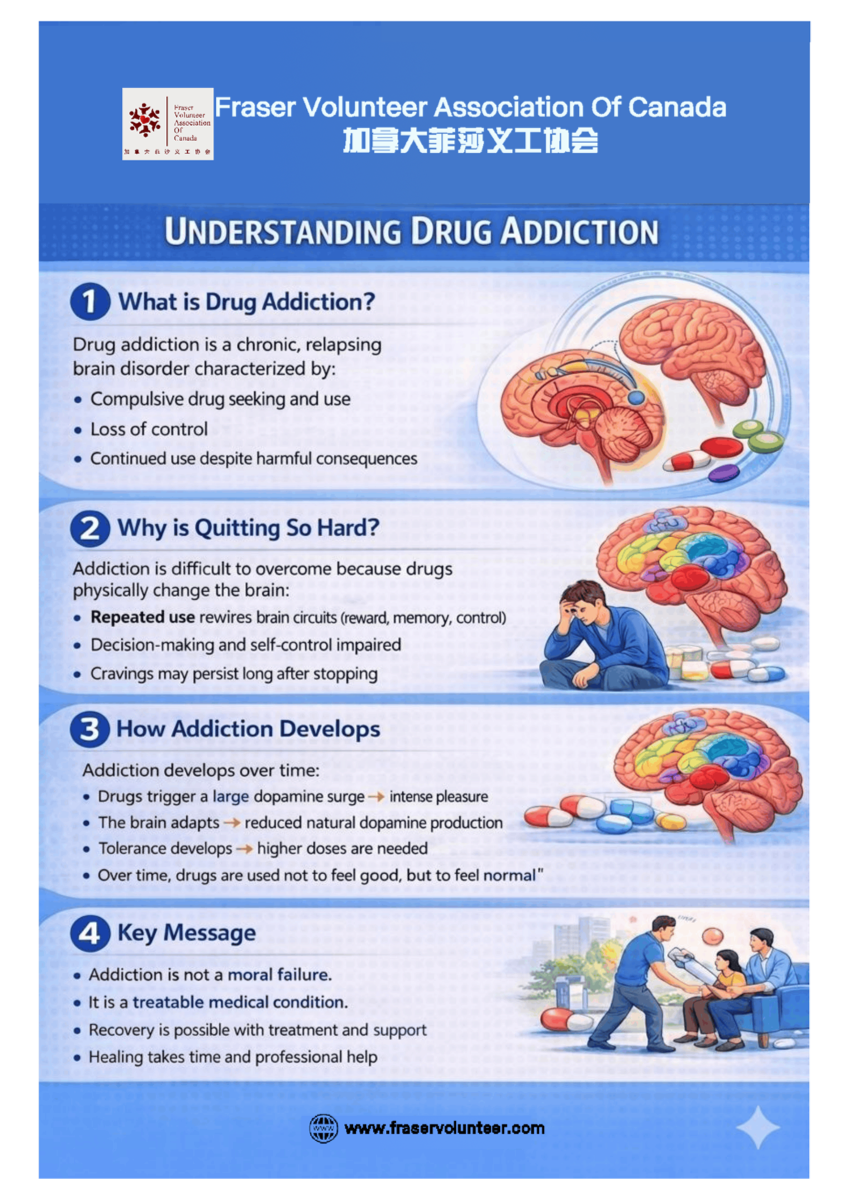
The original poster series explains addiction as a chronic condition that changes behaviour, disrupts self-control, and can make it hard to stop even when someone wants help.
Drug addiction is more than occasional misuse. It is a pattern of compulsive use that can take over judgement, relationships, and daily routines.
Repeated drug use changes brain circuits linked to reward, stress, and decision-making. That is why stopping can feel overwhelming without support.
Experimentation can become regular use, then harmful dependence. Early warning signs include craving, loss of control, secrecy, and using despite consequences.
The poster set highlights both immediate dangers and long-term damage, especially when addiction is ignored or untreated.
Without treatment, addiction can damage physical health, worsen mental health, destabilize family life, affect work and school, and in severe cases lead to death.
Drug use can disrupt the brain's reward system, emotional regulation, self-control, and even vital functions such as breathing and heart rhythm.
The guide points to visible signs such as severe dental damage, skin infections, rapid aging, nasal damage, weight changes, and other physical decline.
Drug misuse can harm the cardiovascular, respiratory, digestive, skeletal, and immune systems, leaving people weaker and more vulnerable over time.
The PDF does not treat addiction as a private issue only. It shows how misuse can affect family safety, economic stability, education, and the wellbeing of others.
One of the strongest practical pages in the poster series is the refusal guide. It keeps prevention simple, direct, and realistic.
Use direct language. A firm answer is often more effective than a vague response.
Leave the situation if pressure continues. Distance reduces risk quickly.
Not every conversation deserves debate. Refuse, then disengage.
Plan ahead and avoid places or groups where drug pressure is expected.
Sometimes a short explanation makes refusal easier, especially with peers.
Redirect the conversation, use humour if appropriate, and reach out to a trusted adult or professional if pressure becomes serious.
The guide ends with short educational summaries of several commonly misused substances. The purpose is recognition and awareness, not normalization.
A powerful synthetic opioid. Tiny amounts can be deadly, especially when people do not know it is present in another substance.
An opioid with a high risk of dependence and overdose. It can severely slow breathing and rapidly endanger life.
A stimulant that can affect the heart, brain, mood, and judgement. Repeated use may lead to strong psychological dependence.
A highly addictive stimulant linked to severe sleep disruption, aggression, paranoia, dental damage, and rapid physical decline.
A term often used for dangerous synthetic stimulants. Effects can be unpredictable and may include agitation, paranoia, or violent behaviour.
The guide notes impaired judgement, reaction time, and possible dependence, with special concern for youth development and mental health.
This web page is an adapted reading version. For poster-style sharing, printing, or offline circulation, use the original PDF file.
Educational material only. If someone may be in immediate danger or showing overdose symptoms, seek professional medical help and contact emergency services immediately.